Entry · Ref QP9QB3C-
How Memory Care Near Me Can Reduce Caretaker Stress And Anxiety
- Posted
- 2026-11-05
- Last amended
- 2026-11-05
- Account
- @jeffreyiplu726
Business Name: Beehive Homes of Sandy
Address: 9532 S 700 E, Sandy, UT 84070
Phone: (801) 975-5244
Beehive Homes of Sandy
BeeHive Homes of Sandy provides personalized assisted living and memory care in a comfortable residential setting. Our compassionate caregivers deliver attentive daily support focused on dignity, independence, comfort, and quality of life.
9532 S 700 E, Sandy, UT 84070
Business Hours
When families start looking for memory care near me, they are normally not looking for a high-end or a lasting strategy they when expected to need. They are looking for breathing room. They are searching for a place where a parent, partner, or sibling with dementia can be secure, seen, and sustained without the family bring every item of the burden alone.
That worry adds up faster than lots of people expect. At first, caregiving may really feel workable. You help with reminders, drive to appointments, check in more frequently, and keep an eye on small modifications. After that the changes come to be much less small. Meals get avoided. Medications are missed out on. Sleep gets cut off. A loved one wanders, repeats inquiries, loses items, or expands anxious in ways that can feel heartbreaking and exhausting at the exact same time. Caregiver stress frequently sneaks in through ordinary days, not remarkable ones. It integrates in the supermarket, throughout the third telephone call before lunch, while attempting to work, or at 2 a.m. After hearing footprints in the hallway.
That is where memory care can make a real difference. Good memory care does not merely "take control of." It develops structure, guidance, and specific assistance that transforms the everyday rhythm for every person entailed. Households still matter deeply, however they are no more the only line of defense.
The concealed weight caregivers carry
Caregiver anxiety is not simply really feeling worn out. It is the accumulation of duty, concern, and psychological strain that originates from continuously anticipating what may fail. If you have ever kept your phone quantity high all evening since you feared a phone call, or if you have rearranged your whole timetable around one unforeseeable appointment, you currently recognize how draining elder care can become.
With dementia and relevant conditions, the stress and anxiety is commonly extra extreme due to the fact that the requirements are both practical and psychological. You might require to handle dishes, hygiene, transport, funds, and drug, while likewise handling a loved one who might not recognize the problem, approve assistance, or bear in mind yesterday's discussion. That mix can make a committed caretaker feel separated, short-tempered, and guilty all at once.
I have seen families reach a snapping point not since they stopped caring, however because they cared so difficult for so long that their very own health and wellness began to battle royal. Some develop chronic migraines or neck and back pain. Others shed sleep, come to be short-fused, or begin preventing close friends since it is easier than discussing what life resembles in the house. A couple of miss check in their own health and wellness due to the fact that every ounce of attention mosts likely to the individual they are helping.
Memory care can relieve that pressure in a sensible way. It provides a setup developed for cognitive decline, where qualified team manage the recurring, safety-focused job that puts on family members caretakers down.
Why memory care really feels different from basic senior care
Not every senior living alternative is developed for memory loss. General senior care can be a great fit for older adults who need some assistance however still feature fairly separately. Memory care is more specialized. It is developed for residents with Alzheimer's disease, dementia, or similar conditions that affect judgment, alignment, communication, and safety.
That difference issues due to the fact that individuals with amnesia commonly need more than help with jobs. They require a calm environment, acquainted regimens, redirection when complication spikes, and team who recognize exactly how dementia adjustments behavior. A resident who becomes memory care near me upset at sunset, asks to "go home" continuously, or stands up to showering might not be hard in the regular feeling. They may be terrified, dizzy, or not able to recognize what is being asked.
This is one reason households often feel such alleviation after exploring a strong memory care area. The best places do not treat complication as negative habits. They respond with patience and ability. They understand exactly how to keep people involved without overwhelming them, exactly how to limit threats without making life feel like a lockup, and how to maintain self-respect when freedom is fading.
That specialized strategy minimizes caregiver anxiety due to the fact that households no more need to improvise options to issues that need training, staffing, and consistent routines.
Safety alone can change everything
For several family members, the most significant source of tension is not a solitary dramatic event. It is the consistent low-level concern that something could occur when no person is watching.

Wandering is one of one of the most common worries. So are range accidents, missed out on medicines, falls, and hazardous driving. Also an individual that appears calm on one day might come to be confused enough on one more day to leave your home at the wrong time or neglect where they are. Families often live with this opportunity behind-the-scenes of every errand, shower, phone call, and nap.
Memory care areas are developed with these dangers in mind. Safe and secure designs, kept an eye on entry points, simplified layout, and personnel guidance help in reducing the opportunities of dangerous situations. That safety net does more than protect the resident. It alleviates the caretaker's nerve system. When you know your loved one remains in a setup developed for memory loss, you quit needing to check for catastrophe every couple of minutes.
This does not mean worry disappears. No straightforward caretaker would certainly state that. It does suggest the concern becomes much more convenient. As opposed to needing to expect every danger alone, households share responsibility with individuals that are trained to see subtle adjustments and react quickly.
Routine can calm both the resident and the family
People living with dementia commonly do far better with predictable routines. An acquainted rhythm helps reduce confusion, stress and anxiety, and resistance. Dishes at routine times, activities that follow a regular pattern, and personnel that know personal preferences can make an unexpected distinction in mood and behavior.
That predictability additionally helps caretakers. When your loved one is home, the day may focus on continuous modifications and tips. Where are the keys? Did I currently consume? Why are we leaving currently? What day is it? Those inquiries can repeat loads of times. With time, the caregiver winds up living in a state of psychological preparedness, constantly prepared to discuss, reroute, or soothe.
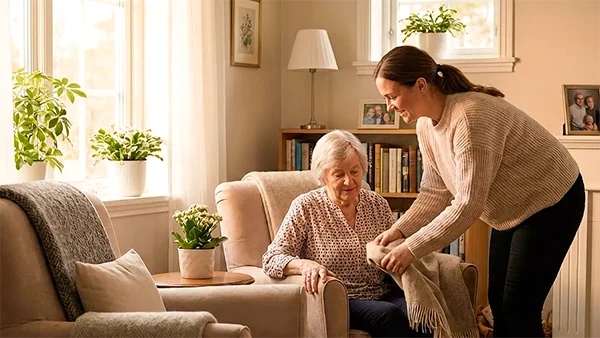
In memory care, the framework is shared. The neighborhood carries the routine. Team take care of tips, transitions, and cueing throughout the day. Households no more have to be the sole caretaker of the schedule, the medicine listing, and the psychological thermostat.
I when heard a little girl explain this change perfectly. She stated that before memory care, every visit with her mother seemed like attempting to maintain a boat constant in rough water. After the action, she might take a seat and really chat with her mom once more, even when the conversation roamed. That kind of change is not small. It transforms the texture of the relationship.
The value of respite care while you decide
Not every household is ready to make a long-term action right now. Sometimes the first useful step is respite care Temporary keeps can provide caretakers an actual break, not simply an afternoon of tasks squeezed between commitments. A respite keep can last a few days, a couple of weeks, or one more brief interval depending on the community and the household's needs.
That momentary assistance can be a lifeline. It offers a caretaker time to recover from illness, take care of a work target date, traveling for a family members event, or merely rest without paying attention for every sound in the house. It additionally provides family members a possibility to see how memory care really feels in real life. For numerous, the shift comes to be less frightening after they see just how the team engages with citizens, how meals are handled, and how daily regimens are organized.
Respite care can also reduce anxiety by subjecting hidden stress. Some caretakers do not recognize how broken they are till they are gotten rid of from the everyday grind for a couple of days. The body catches up when the adrenaline quiets. That realization can be uncomfortable, but it is commonly making clear. It shows the household that even more support is not a failure, it is a necessity.
Better relationships commonly comply with far better support
One of the most ignored advantages of memory care is the method it can boost family partnerships. When caregiving dominates every communication, love can begin to seem like a work summary. Discussions end up being reminders, improvements, or negotiations. The emotional area for warmth shrinks.
After a loved one relocates into memory care, visits usually alter. Families may spend less time on logistics and more time on link. A spouse can hold a hand without fretting about lunch prep. A grown-up youngster can sit in the yard, look at old pictures, and laugh when a memory surface areas. Even if the person with dementia can not hold lengthy conversations, the mood of the visit can be gentler because the family members is no more clambering to handle every need.
This issues greater than individuals expect. Caretaker stress is not just physical. It is psychological fatigue from seeing a person you like decrease while trying to continue to be individual, arranged, and upbeat. Memory care takes a few of that stress off the partnership. It gives households back the possibility to be family.
Knowing what to try to find near you
When people search for senior living near me or memory care alternatives nearby, they are usually contrasting a number of neighborhoods at the same time. The brochures may seem comparable, however the day-to-day feeling can vary a good deal. Some areas are warm and receptive. Others are neat however impersonal. Some absolutely understand dementia care. Others provide only a variation of assisted living with memory assistance added on the side.
A strong visit must leave you with more than a basic perception. Take notice of exactly how team speak with citizens, especially when redirecting an overwhelmed person. Notice whether the setting really feels calm or noisy. Ask about staffing patterns, activity shows, medication monitoring, and exactly how the area deals with changes in actions. Family members should also ask what happens when a resident's needs increase. That concern matters because dementia is modern, and a great care strategy needs room to adapt.
If you visit throughout a mealtime or late afternoon, you will certainly typically discover a lot. Mealtime can reveal whether citizens are supported patiently or rushed via. Late mid-day can reveal whether the area knows how to manage sundowning, that acquainted duration when complication or frustration might rise. These are not minor information. They are the day-to-day realities that shape caretaker stress after placement.
Questions worth asking during a visit
You do not need an official script, but a few direct questions can make clear a lot. Ask how the personnel responds when a resident comes to be dizzy, just how they encourage hydration and dishes, and whether households are maintained informed when patterns transform. Ask what training caregivers get for dementia-related habits. Also ask how often activities are tailored to specific passions, because a well-run memory care setup should do greater than fill time.
Money is part of the anxiety too
Caregiver stress is often made worse by monetary uncertainty. Families might postpone assistance due to the fact that they are unclear what memory care expenses, how long savings will certainly last, or just how the step will influence a partner at home. Those issues are actual. They should have straightforward attention.
The cost of memory care differs depending upon place, level of assistance, and services consisted of. In a lot of cases, memory care expenses greater than basic senior care as a result of staffing and supervision requirements. That can feel daunting. Still, families should consider the complete picture. Home care, overdue caregiving hours, missed out on job, repeated medical facility visits, home alterations, and the psychological toll all lug cost also, even if those expenses are not always noticeable on a regular monthly invoice.
Sometimes the actual contrast is not "memory care versus nothing." It is memory care versus an unsustainable mix of patchwork aid, family members exhaustion, and expanding safety threat. That is a tough estimation, yet a truthful one.
When the action feels emotionally complicated
Even when memory care is plainly the safer choice, the choice can still feel shateringly individual. Adult children may wrestle with sense of guilt. Partners may feel they are surrendering. Siblings might differ about timing, level of demand, or which community is best. These reactions prevail, and they are worthy of respect.

A step into memory care is not the same as tipping away from duty. It is a modification in just how duty is shared. For many families, that change takes time. There might be rips at the initial tour, resistance during the very first discussion, and mixed feelings on moving day. That does not mean the choice is wrong. It suggests the family members recognizes the stakes.
I have seen children say sorry to every other for being "as well functional," when in reality functionality is typically what maintains a family working. I have also seen partners stay involved in gorgeous methods after placement, bringing preferred snacks, attending activities, or seeing at the very same time every day so the resident has a familiar touchpoint. Memory care functions best when household continues to be existing, but not only responsible.
The silent alleviation caregivers discover first
People sometimes anticipate a remarkable wave of alleviation after a relocation, yet it usually gets here in quieter means. A caregiver rests via the evening for the very first time in months. A partner consumes a complete morning meal without rushing. A grown-up kid realizes they are no longer dreading every phone call from your home. The schedule opens up a little. Conversations with pals end up being feasible again.
These changes might appear small, yet they matter. Caretaker stress reduces via repeating, and relief functions the same way. Each normal day that comes to be more manageable offers the caregiver a little bit much more strength. In time, that can boost physical wellness, state of mind, and decision-making.
Good memory care does not eliminate pain. Absolutely nothing can do that. Yet it can lower the continuous pressure that turns pain right into exhaustion. It can create enough security for family members to show up with more persistence and much less fear.
Choosing support prior to crisis hits
Many households wait up until an autumn, a roaming event, or a clinical scare requires the problem. Sometimes there is no option. The situation has simply relocated too far. However when feasible, it is much better to explore memory care prior to the situation ends up being overwhelming. Preparation early provides households time to contrast communities, comprehend care levels, and make thoughtful decisions rather than emergency ones.
That is frequently the point when memory care near me comes to be more than a keywords. It comes to be a practical strategy for safeguarding both the person with dementia and individuals that enjoy them. The appropriate neighborhood can reduce daily stress, consistent a challenging regimen, and recover some of the energy that caregiving has actually consumed.
Families who pick memory care are not quiting. They are identifying that love in some cases needs structure, support, and competent hands around it. That is specifically real in dementia care, where the needs are ruthless and the smallest comforts matter a great deal.
When the appropriate fit is found, the difference is visible. The person getting care really feels more secure and less confused. The caregiver really feels less alone. The entire family members gets a little even more area to breathe.
Beehive Homes of Sandy provides assisted living care
Beehive Homes of Sandy provides memory care services
Beehive Homes of Sandy provides respite care services
Beehive Homes of Sandy supports assistance with bathing and grooming
Beehive Homes of Sandy offers private bedrooms with private bathrooms
Beehive Homes of Sandy provides medication monitoring and documentation
Beehive Homes of Sandy serves dietitian-approved meals
Beehive Homes of Sandy provides housekeeping services
Beehive Homes of Sandy provides laundry services
Beehive Homes of Sandy offers community dining and social engagement activities
Beehive Homes of Sandy features life enrichment activities
Beehive Homes of Sandy supports personal care assistance during meals and daily routines
Beehive Homes of Sandy promotes frequent physical and mental exercise opportunities
Beehive Homes of Sandy provides a home-like residential environment
Beehive Homes of Sandy creates customized care plans as residents’ needs change
Beehive Homes of Sandy assesses individual resident care needs
Beehive Homes of Sandy accepts private pay and long-term care insurance
Beehive Homes of Sandy assists qualified veterans with Aid and Attendance benefits
Beehive Homes of Sandy encourages meaningful resident-to-staff relationships
Beehive Homes of Sandy delivers compassionate, attentive senior care focused on dignity and comfort
Beehive Homes of Sandy has a phone number of (801) 975-5244
Beehive Homes of Sandy has an address of 9532 S 700 E, Sandy, UT 84070
Beehive Homes of Sandy has a website https://beehivehomes.com/locations/sandy/
Beehive Homes of Sandy has Google Maps listing https://maps.app.goo.gl/gxoX9vT5PFH9mJTP9
Beehive Homes of Sandy won Top Assisted Living Homes 2025
Beehive Homes of Sandy earned Best Customer Service Award 2024
People Also Ask about Beehive Homes of Sandy
What does assisted living cost at BeeHive Homes of Sandy?
BeeHive Homes of Sandy offers all-inclusive assisted living pricing. That means one straightforward monthly rate covering personal care, home-cooked meals, housekeeping, laundry, and daily support, with no hidden costs or surprise fees. Because we offer seasonal pricing and current availability can change, we invite families to call for up-to-date rates and any current offers. Before move-in, our team completes a personalized assessment of health, mobility, medication, and activities-of-daily-living needs, so we can confirm the right care plan and share clear pricing for your family.
Can residents remain at BeeHive Homes as their care needs change?
Yes. In almost all cases, residents can remain at BeeHive Homes of Sandy as their care needs change, aging in place in a familiar, homelike environment. Because we coordinate with third-party home health and hospice providers, residents can receive added care right in the home rather than relocating. It is very rare for a resident to need to move, and that typically happens only when someone requires continuous skilled nursing or hospital-level care beyond what an assisted living or memory care home can safely provide.
Is a nurse available at BeeHive Homes of Sandy?
Yes. BeeHive Homes of Sandy has a nurse who provides day-to-day oversight of residents and works directly with each resident's own physicians and healthcare providers to continue the best possible care. Residents may keep seeing their preferred doctors, and when ordered by a medical provider, home health, therapy, or hospice services can often be delivered directly in the home. Caregiver support is available 24 hours a day.
What are the visiting hours at BeeHive Homes of Sandy?
Visit anytime. At BeeHive Homes of Sandy, we would rather family come too often than not often enough, because strong family relationships are an important part of every resident's well-being. We simply ask that visits be respectful of the other residents who live here, along with each resident's meals, rest, and care schedule. If you would like to come very early or very late, just let us know in advance and we will make it work.
Are rooms available for couples at BeeHive Homes of Sandy?
BeeHive Homes of Sandy may have room options for couples who wish to remain together while receiving senior care. Availability depends on current openings, room size, and the care needs of both individuals. Please contact our team to discuss available accommodations and find the best fit for your family.
What services are provided at BeeHive Homes of Sandy?
BeeHive Homes of Sandy provides personalized assistance with bathing, dressing, grooming, mobility, medication management, meals, housekeeping, laundry, and other activities of daily living. Residents also enjoy private rooms, home-cooked meals, engaging senior activities, and caregiver support available 24 hours a day, all in a smaller, residential-style setting that feels like home.
Does BeeHive Homes of Sandy offer memory care and respite care?
Yes. BeeHive Homes of Sandy offers both memory care and assisted living. Our memory care supports residents living with Alzheimer's disease, dementia, or other cognitive changes. Short-term respite care is also available for recovery periods, caregiver relief, or families who want to experience BeeHive Homes before considering a long-term move. Availability and suitability are determined through an individual assessment.
How can I schedule a tour of BeeHive Homes of Sandy?
Call (801) 975-5244 to schedule a tour of BeeHive Homes of Sandy anytime. A personal visit is often the best way to experience our calm, homelike atmosphere, meet our caregivers, see the private rooms and shared spaces, and ask questions about assisted living, memory care, or respite care in Sandy, Utah. We would love to help you decide whether BeeHive Homes is the right next step for someone you love.
Where is Beehive Homes of Sandy located?
Beehive Homes of Sandy is conveniently located at 9532 S 700 E, Sandy, UT 84070. You can easily find directions on Google Maps or call at (801) 975-5244 Monday through Sunday Open 24 hours
How can I contact Beehive Homes of Sandy?
You can contact Beehive Homes of Sandy by phone at: (801) 975-5244, visit their website at https://beehivehomes.com/locations/sandy/
The Amphitheater Park offers a welcoming environment for families visiting loved ones receiving Assisted living, memory care, senior care, elderly care, and respite care.